Dentistry is changing fast. AI isn't the future anymore — it's already in the chair next to you.
From spotting cavities before they hurt to robots placing implants with surgical precision, artificial intelligence is quietly upgrading how dentists work, diagnose, and grow their practices.
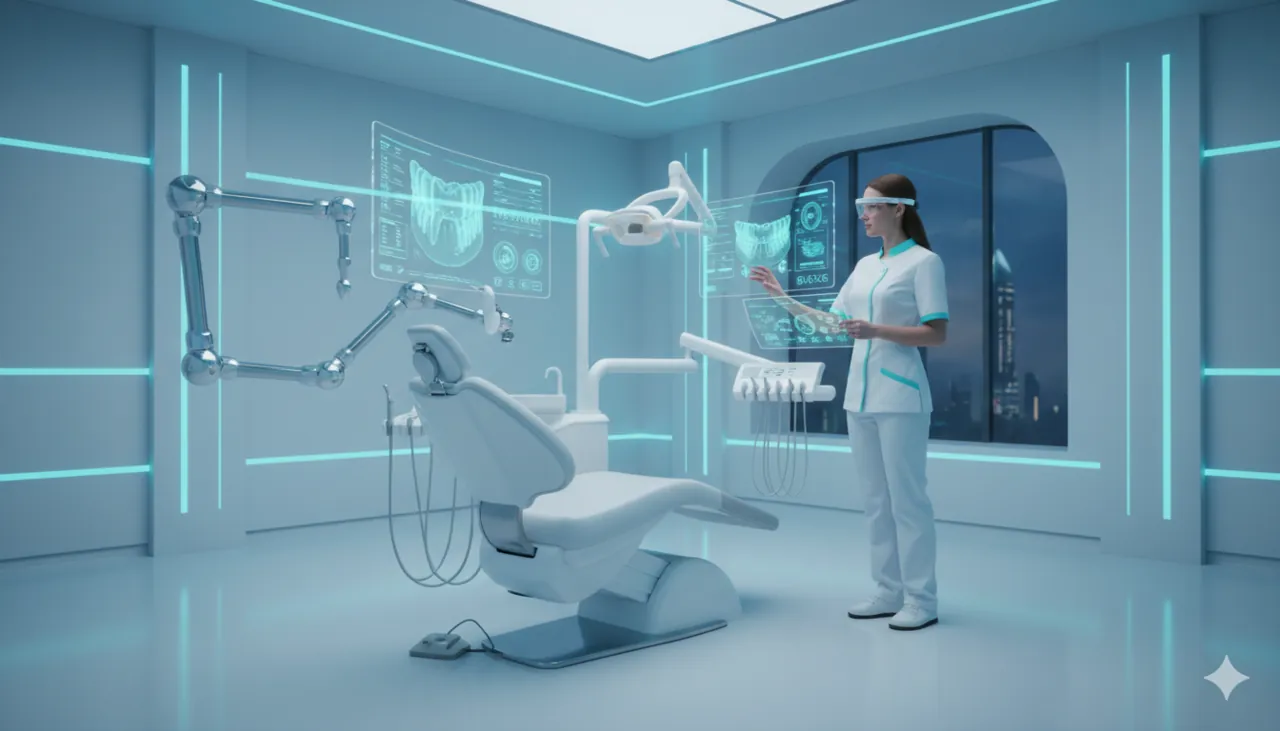 AI-Enhanced Dental Clinic
1. Diagnosis That Sees What You Miss
AI now reads X-rays, intra-oral photos, and CBCT scans — and the regulator has been signing off steadily. Platforms like Overjet and Pearl highlight cavities, bone loss, and early gum issues, sometimes before the dentist's eye catches them. Pearl's Second Opinion was the first AI system cleared in the US to detect a broad range of dental conditions on X-rays, in March 2022, and both vendors have since accumulated clearances covering paediatric indications, bone-level measurement, panoramic radiographs and CBCT. Think of it as a second pair of eyes that never gets tired.
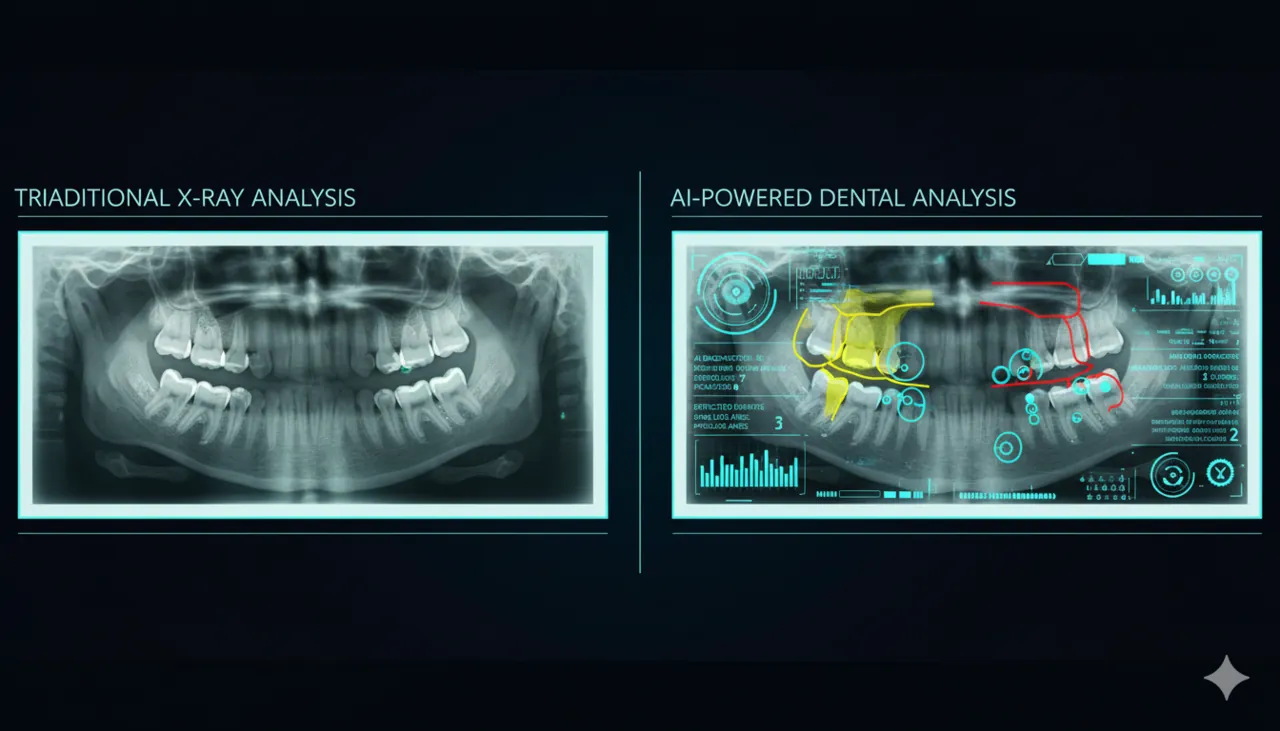 AI Diagnosis Comparison
Result: cleaner reports, higher patient trust, and stronger case acceptance.
2. 3D Imaging Gets a Brain
AI doesn't just mark cavities — it understands anatomy. It can map nerves, measure bone, and mark implant sites automatically. CBCT scans that once took 20 minutes to interpret now take seconds.
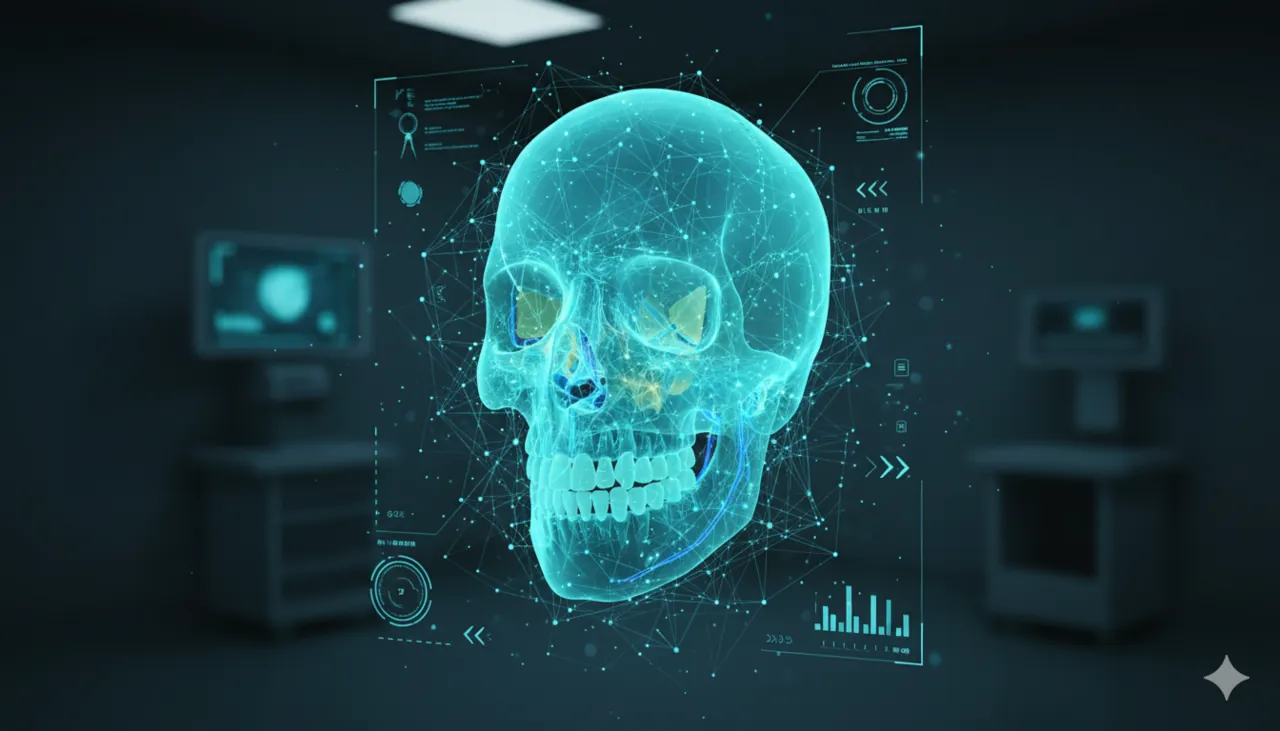 3D Brain Imaging
3. Robots Are Entering the Room
Meet Yomi by Neocis, the first and still only US FDA-cleared robotic system for dental implant surgery. It guides your hand during implant placement — controlling depth and angle within a fraction of a millimeter. Clinicians have now completed more than 100,000 osteotomies on the platform, with close to 100,000 implants placed, and a next-generation system, Yomi S, cleared FDA review in late 2025. Less guesswork. More precision. Happier patients.
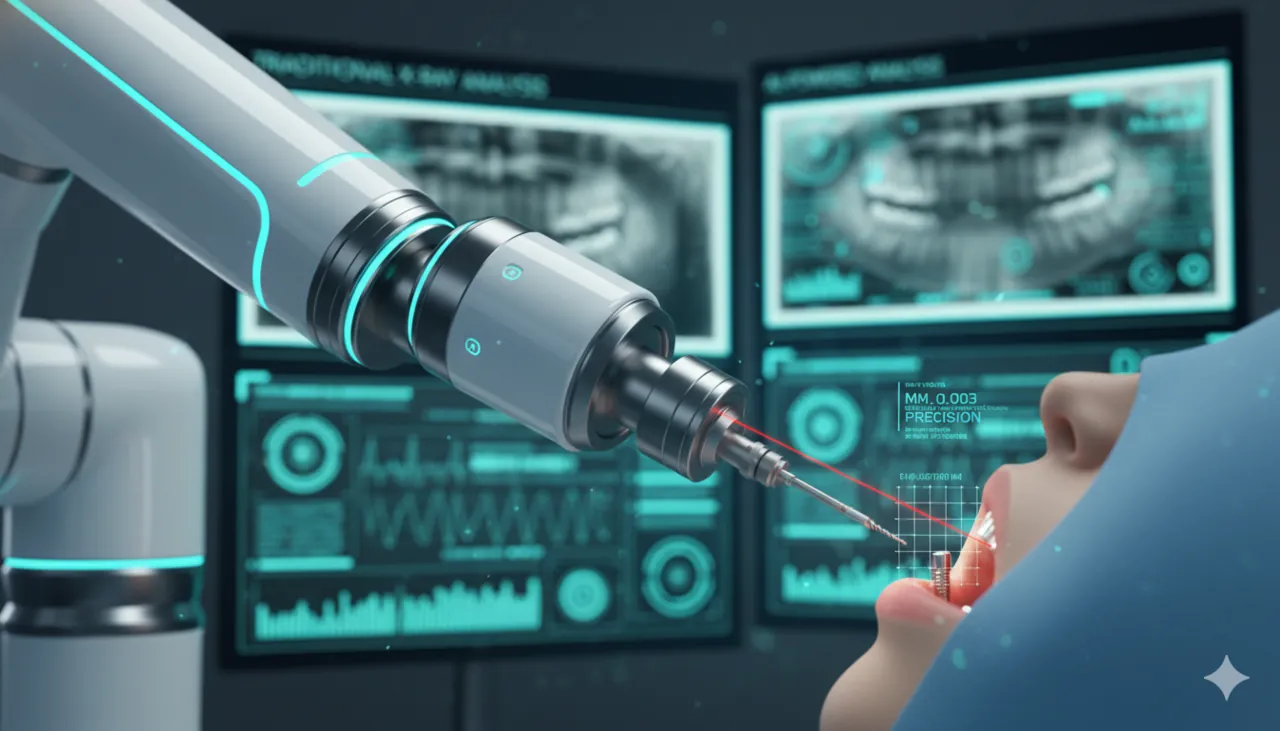 Dental Robot Precision
4. Smarter Treatment Planning
AI is optimizing orthodontic plans and implant positions. It predicts tooth movement, shortens treatment time, and flags potential root resorption or bone issues before they start. The math is simple: better planning = fewer chairside corrections.
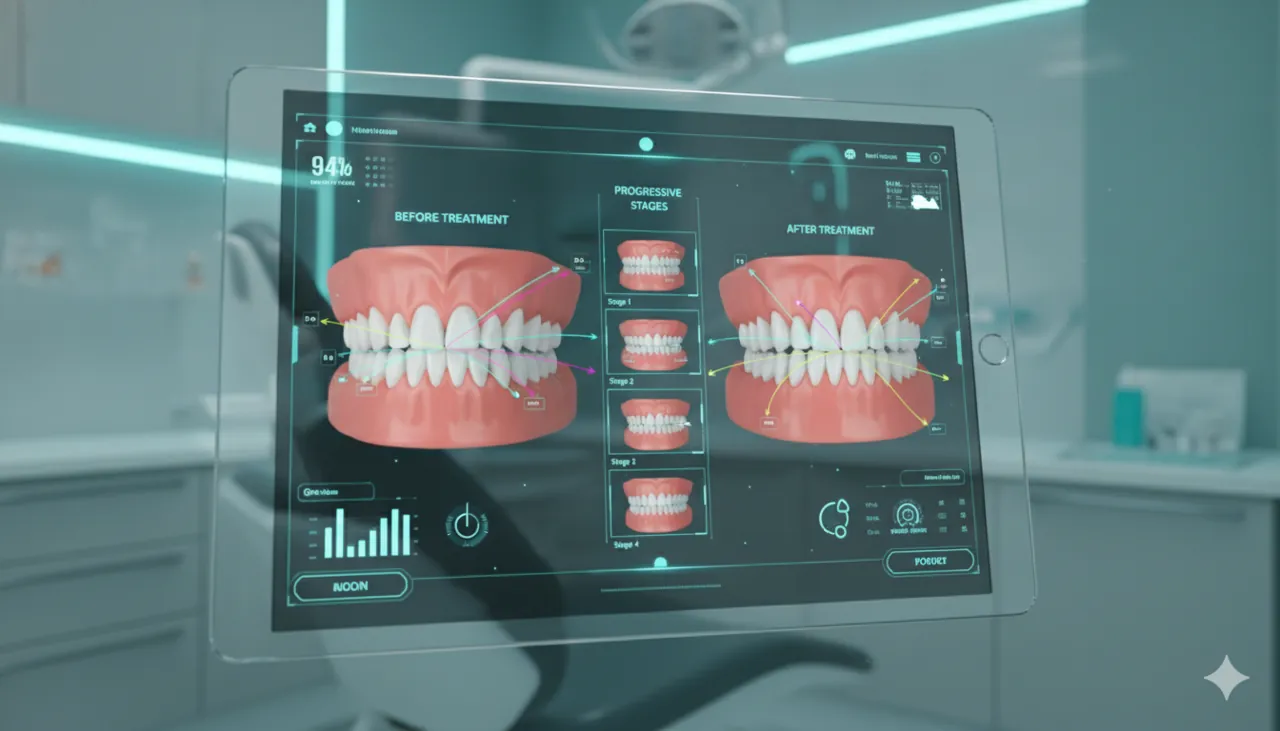 Smart Treatment Planning
5. Clinics That Run Themselves
Chatbots now book appointments, answer FAQs, and verify insurance while you sleep. AI systems fill empty slots, send smart reminders, and handle paperwork. Your team focuses on patients — not follow-ups and forms.
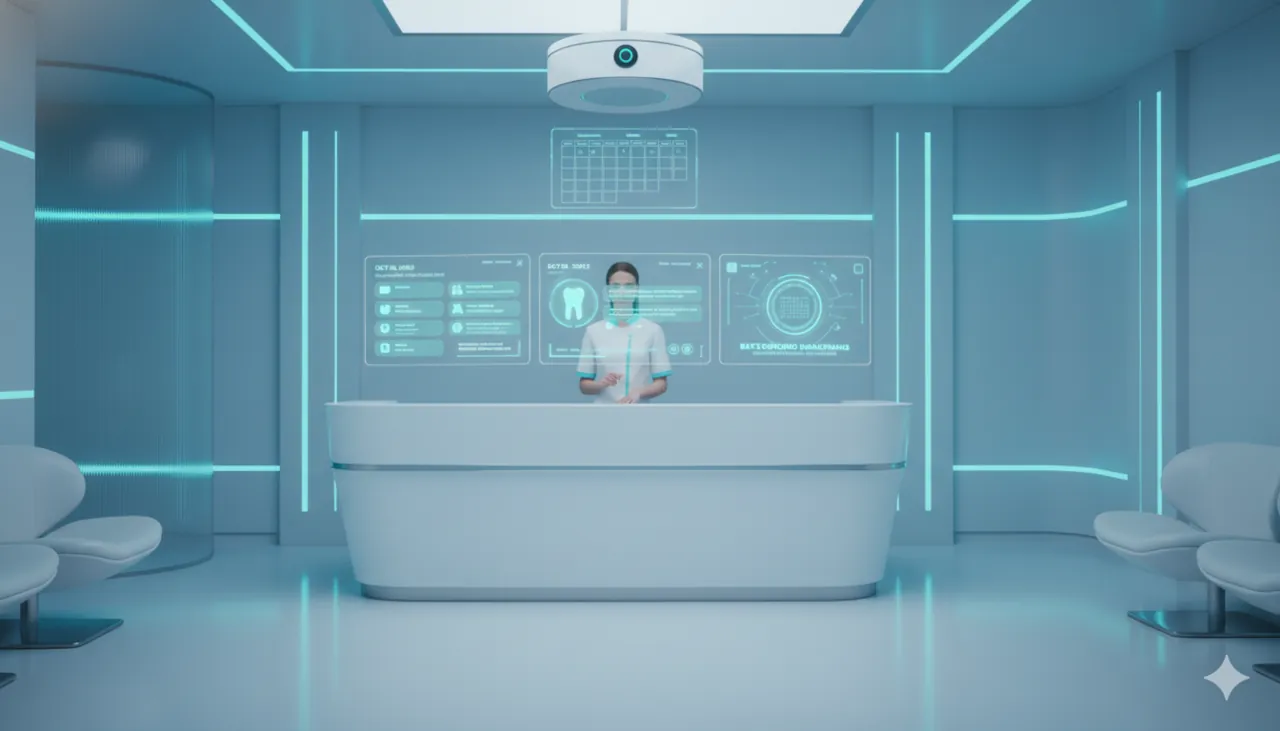 Automated Clinic Operations
6. Training the Next Generation
Dental schools use AI simulators and VR labs to teach procedures and grading. Students get instant feedback — where they cut too deep, where their prep angle went off. The result: faster learning and more confident clinicians.
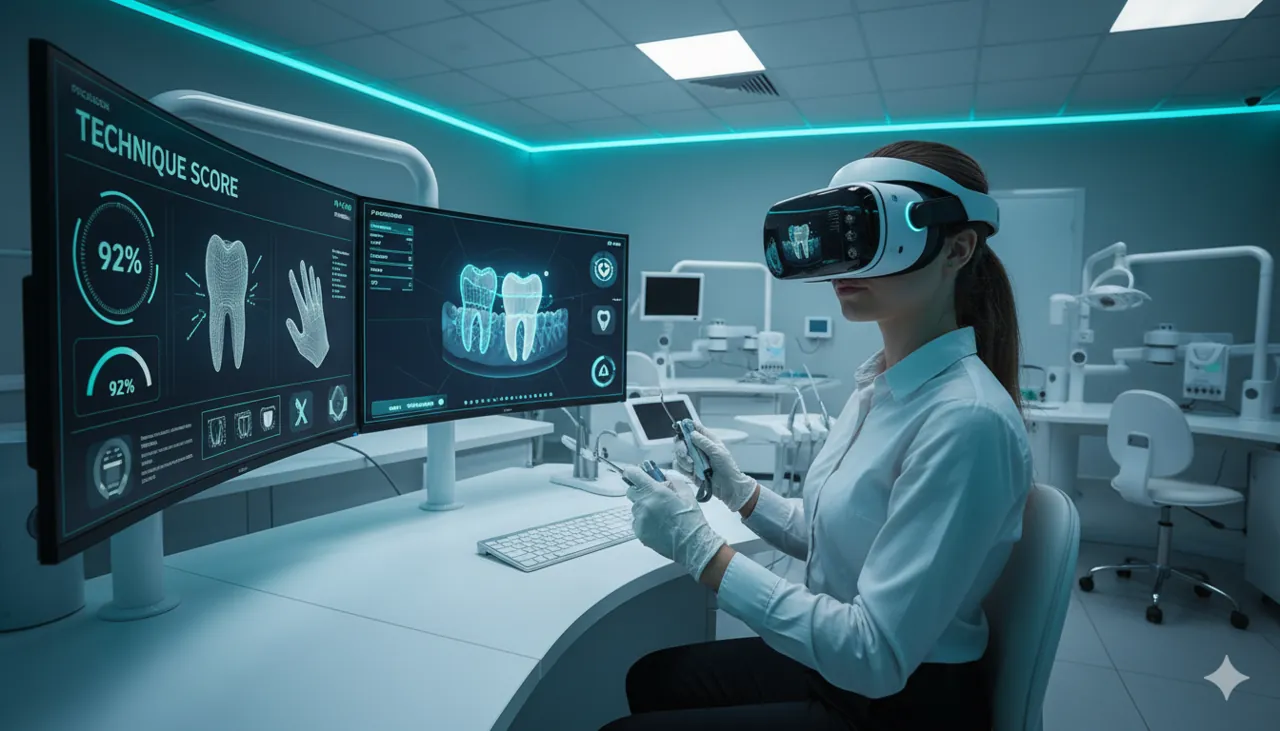 VR Dental Training
The Bottom Line
AI doesn't replace dentists. It amplifies them — saving time, improving precision, and elevating the patient experience. Clinics adopting AI early are already seeing higher efficiency, lower costs, and stronger reputations.
The question isn't if AI will reshape dentistry. It's when your clinic decides to lead.
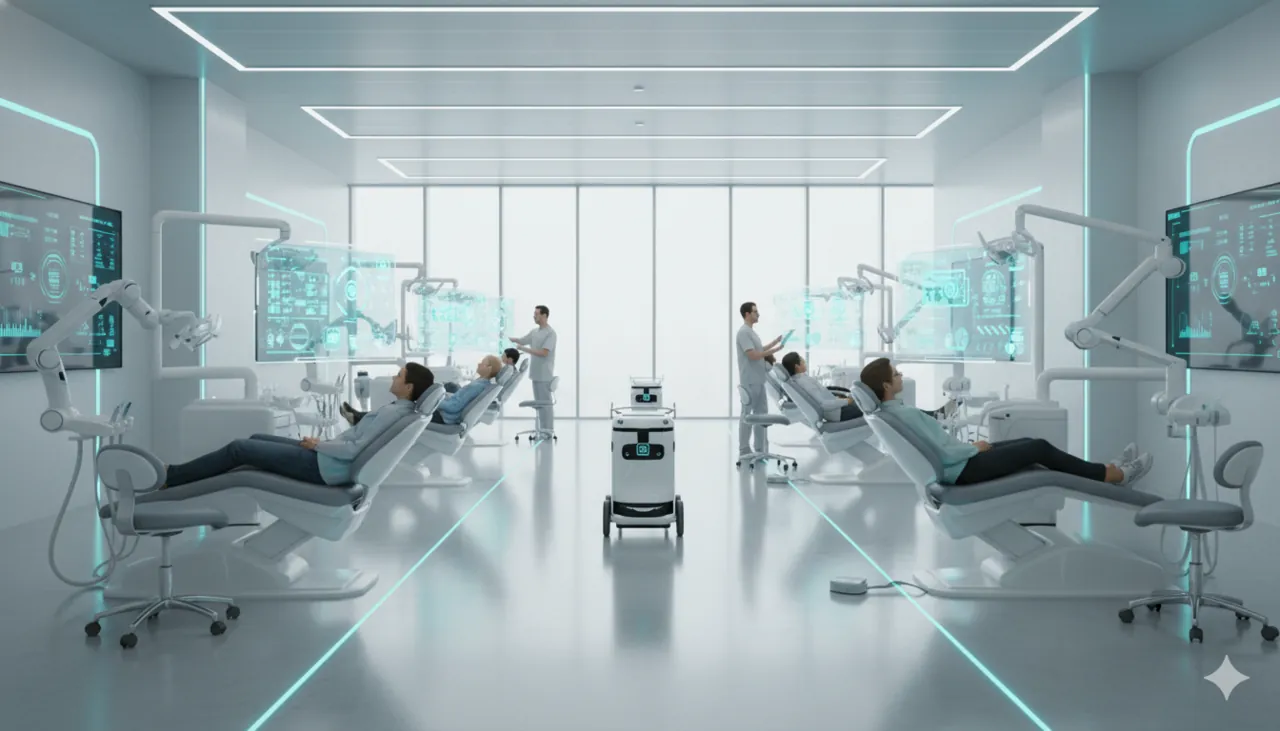 Future Dental Clinic
- AI
- Dentistry
- Healthcare Technology
- Practice Management